The theme of this year's high-level segment is 'Multilateralism after Covid19: What kind of UN do we need at the 75th anniversary'.

A country required two-thirds majority of 124 to win a seat in the elections.

The UN General Assembly has adopted a resolution, backed by India, to correct the world map for a more accurate representation of continental landmasses. The resolution addresses the distortions caused by the widely used Mercator projection, which minimises the perceived sizes of regions like Africa, Latin America, and South Asia, promoting an unbalanced global view. India supports the move towards more accurate cartographic practices, specifically endorsing broader use of Equal Area map projections.

Chinese President Xi Jinping is set to visit the United States from September 23 to 25 for summit talks with US President Donald Trump, with discussions expected to cover critical economic and trade issues, including AI, and the recently signed US sanctions law targeting countries buying Russian oil and gas.
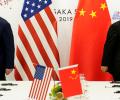
Top US and Chinese officials, including Vice Premier He Lifeng and Treasury Secretary Scott Bessent, held "candid, in-depth and constructive" talks in New York on economic and trade issues, with a specific focus on artificial intelligence. These discussions precede Chinese President Xi Jinping's anticipated visit to Washington and occur amidst new US sanctions targeting countries purchasing Russian oil and gas, and the US unveiling an "AI Force."

UN Secretary-General Antonio Guterres has expressed deep concern over US President Donald Trump's warning to Iran and appealed for the re-establishment of freedom of navigation in the Strait of Hormuz.

A vessel carrying 20,000 metric tonnes of Liquefied Petroleum Gas (LPG) arrived at Deendayal Port Authority in Kandla, Gujarat, after crossing the Strait of Hormuz amid the West Asia crisis.

President Donald Trump has withdrawn the United States from over 60 international organisations, including United Nations bodies and the India-France-led International Solar Alliance, calling the institutions 'redundant' and 'contrary' to America's interests.

United States President Donald Trump on Friday signalled the US intention of going all out in its campaign against Iran's Islamic regime, warning Iran to watch out for what would happen today and saying that the US was winning the conflict despite what reports claimed.

China has reaffirmed its territorial claims over the Shaksgam Valley, dismissing India's objections to infrastructure projects in the area. The Chinese Foreign Ministry spokesperson stated that the territory is part of China and its activities there are beyond reproach.

Iran has put forward a comprehensive 10-point framework that it says forms the basis of a complete resolution.

Iran has formally appealed to the United Nations Security Council and the UN Secretary-General, accusing the United States of inciting violence, interfering in Iran's internal affairs, and threatening military action, according to an official letter circulated by Iran's Permanent Mission to the UN.
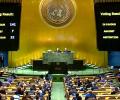
India abstained from a UN General Assembly vote on a resolution regarding Afghanistan, citing the need for a balanced approach that combines incentives and disincentives, and calling for new initiatives to address the humanitarian crisis.

The intriguing bit is that Trump is likely to attend the talks in Islamabad this weekend -- if he does, it will be the clearest signal yet that the US is ready to exit the war with some sort of win to show, since he cannot afford to go for the talks and return empty-handed, notes Prem Panicker in his must read blog on the Iran War

Karex, the Malaysian company that makes roughly one in five of the world's condoms -- about five billion a year, supplying Durex and Trojan among others -- announced this week that it is raising prices by up to 30 percent. The reason is the Strait of Hormuz.

Trump may strike. He may announce productive talks and extend again. He may do both at the same time. Iran will not open the Strait on someone else's terms, so no matter what happens, that problem will remain unsolved. And the IRGC will still be collecting its $2 million toll from every ship bold enough to ask permission to pass.

Both sides have now revealed a preference for escalation over strategic defeat, and each new provocation narrows the space for the next pause. The Touska seizure, Iran's refusal to negotiate under blockade, Israel's strikes on Iranian oil infrastructure -- all of these add up to an increasingly untenable situation. This makes the wild card -- Trump and his motormouth -- more consequential than ever, notes Prem Panicker in his must read blog on the Iran War.

Afghan Foreign Minister Amir Khan Muttaqi arrived in New Delhi for a six-day visit, marking the first high-level trip from Kabul since the Taliban's takeover. He is scheduled to meet with Indian officials to discuss bilateral relations and regional issues.

Trump has made it clear: the US will not lift its blockade of Iranian ports until a deal is signed.

Left parties on Saturday denounced the United States for attacking Venezuela and capturing its President Nicholas Maduro, with Communist Party of India-Marxist general secretary M A Baby terming the nighttime military action an 'act of international terrorism by US-led imperialism'.
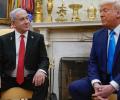
The United Nations Security Council has adopted a draft resolution endorsing United States President Donald Trump's Gaza peace plan and authorising the establishment of an international stabilisation force in the enclave, with the American leader describing it as a 'moment of true historic proportion'.

Earlier in the day, the ministry of external affairs "strongly advised" Indians to avoid travel to Iran until further notice, amid rising tensions and protests in the Islamic Republic.

The question is no longer whether the war will expand. It has. The next few days will tell us whether the war stabilises around Hormuz or whether the Strait itself becomes the trigger for a far larger rupture. What to watch for over the next 48 hours is simple: Any move by the US toward direct naval control of the Strait; any credible Iranian attempt to disrupt or mine shipping lanes and, critically, whether energy infrastructure in the Gulf continues to be targeted.If those lines are crossed in tandem, the war will no longer be containable within the region.

Iran is fighting a different war: Older, slower, and in some ways more dangerous. Iran doesn't need to shoot down an F/A-18. It only needs to make the Strait of Hormuz feel dangerous long enough for insurance markets, shipping companies, and oil futures traders to do the rest. Prem Panicker continues his must-read daily blog on the war in the Middle East.

The purge in Washington does not pause the war. Strikes continue, Hormuz remains closed, and Brent crude is still dancing around $109 a barrel. For India, the command chaos in the Pentagon is another layer of uncertainty piled on five weeks of conflict that was already straining every buffer Delhi has.

Iran was ousted from the United Nations Commission on the Status of Women on Wednesday evening in the wake of the Mahsa Amini protest.

The Commission on the Status of Women (CSW) is a functional commission of the UN Economic and Social Council (ECOSOC). The 54-member ECOSOC, holding the first plenary meeting of its 2021 session in the General Assembly Hall on Monday, held elections for two seats in the Asia-Pacific States category with Afghanistan, India and China in the fray.

'A country that hosts and even celebrates UNSC-sanctioned terrorists, commenting on India whose pluralistic ethos and democratic credentials are exemplars for the world, is a contrast for everyone to see'

India has strongly condemned Pakistan's remarks on Jammu and Kashmir at the UN Human Rights Council, calling it a "failed state" that spreads falsehoods and relies on international handouts. India's delegate, Kshitij Tyagi, highlighted the progress made in Jammu and Kashmir and said Pakistan is in no position to lecture anyone on human rights, given its own record of abuses and support for terrorism.

Trump, 79, made a lively entrance in Malaysia's capital, dancing to the rhythm of drums on the airport tarmac near Air Force One, his energetic moves drawing smiles from onlookers.
'The message that India has conveyed since the start of this conflict is clear and consistent. It is important to prevent escalation to ensure continued delivery of humanitarian aid and to work towards an early restoration of peace and stability. A peaceful resolution of the conflict through dialogue and diplomacy is the only way forward'

India was among the 11 countries that abstained from voting on the resolution in the UN Economic and Social Council.

He said despite efforts by the UN, the threat of terrorism is only growing and expanding, particularly in Asia and Africa.

It is the first time that India has voted on a resolution at the UN that is being perceived as pro-Israel.

As the UN marks 75 years of its existence, the 193-member UN General Assembly adopted a forward-looking political declaration that gave a clarion call for strengthening mechanism to combat terrorism, reformed multilateralism, inclusive development and better preparedness to deal with challenges like the COVID-19 pandemic.

Elected along with India on the board of UNAID were the US, Russia, Ethiopia, Mauritania, Guatemala and Monaco.

UN member states elected 18 countries to serve three-year terms starting next year and three other nations through by-elections held as some countries were stepping down from the 54-member Council before the formal end of their terms.
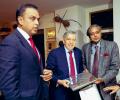
All-party parliamentary delegations on Friday met leaders and diplomats from several countries to galvanise international action against terrorists and decisively counter the tactics of those who perpetrate, support and sponsor cross-border terror activities against India.
'It is typical of China's strategic deception of making virtue out of necessity,' observes Rup Narayan Das.

Chatterjee, whose early career was in the Indian Army, was decorated for gallantry by the President of India in 1995.
